
Medication-Assisted Treatment on the Ground: How Federal Policy Shifts Are Reshaping Outreach in Brooklyn
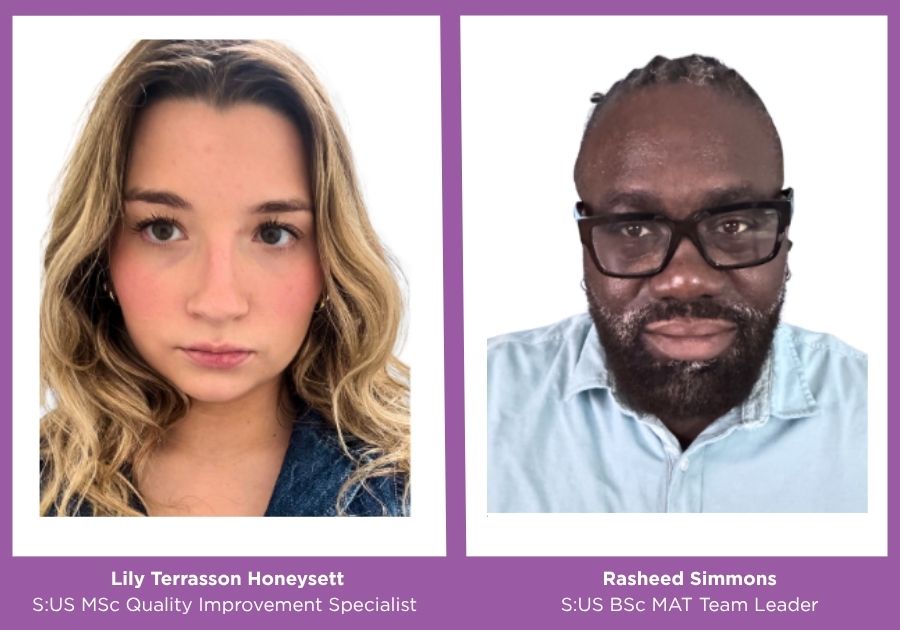
Authors:
Lily Terrasson Honeysett | S:US MSc Quality Improvement Specialist and
Rasheed Simmons | S:US BSc MAT Team Leader
Behavioral Health News
Summer 2026
Opioid use remains a significant public health threat in the United States, with nearly 80,000 opioid‑involved overdoses reported in 2023—accounting for 76% of all overdoses that year (Centers for Disease Control and Prevention, 2025). As Substance Use Disorder (SUD) continues to affect more individuals, treatment models have expanded to address overdose risk and opioid dependence. Medication-Assisted Treatment (MAT) has become an increasingly common and evidence‑based approach (Deyo‑Svendsen et al., 2020), combining medication with counseling to reduce cravings, support withdrawal, and prevent overdose. Approved medications include buprenorphine, methadone, and naltrexone (Spayde‑Baker & Patek, 2023).
MAT is highly effective—overdose rates are 50% lower among individuals receiving MAT compared to those who are not (National Association of Counties, 2022). However, it remains largely inaccessible due to limited medical personnel or lack of access (Baus et al., 2023). Only 25% of individuals who may benefit from MAT receive it (Dowell et al., 2024). Older Black men are disproportionately affected by Opioid Use Disorder yet they remain less likely to seek or receive treatment (Volkow, 2024). There remain several reasons for this treatment gap, with distrust of public health institutions often cited as one. With a longstanding history of racism in the U.S. healthcare system, many Black individuals feel nervous about approaching physicians on substance use and treatment (Volkow, 2024). Recently, there has been a push to increase access to MAT services and providers, such as the federally funded MAT grant that supports outreach in underserved communities.
An example of the MAT grant in action is Services for the Underserved’s program. Services for the Underserved (S:US) is a human services organization dedicated to supporting individuals facing mental health challenges, SUD, poverty, and disability. S:US staff prioritize an interdisciplinary approach to mental health challenges and substance use, believing everyone is unique in their needs and circumstances. The MAT team at S:US primarily serves the Brooklyn area, bridging the gap as many communities we serve are Black and Brown, providing outreach and connecting people to MAT services across New York City. However, stigma remains a significant barrier for individuals engaging with the program. Federal policy changes, such as immigration law enforcement and changes to harm-reduction programming, have increased stigma around opioid use, affecting individuals’ engagement with treatment programs.
Recent federal policy changes, including heightened immigration enforcement, have made outreach more challenging. Increased ICE raids have created widespread anxiety among both documented and undocumented individuals (Chatterjee, 2026). As fears grow, housing programs have tightened visitor protocols. MAT staff now face limits when visiting, as residents are often hesitant to share personal information due to fear of detention. To adapt, S:US’ MAT staff leave flyers, offer follow‑up visits, and prioritize participant safety over immediate enrollment.
To reduce fear and confusion, we remind participants that we are S:US staff and that we offer the same protections as other program staff to alleviate anxiety. During the height of ICE raids in New York City, Recovery & Treatment (R&T) staff, the MAT team included, were trained on procedures for in-person encounters with non-local law enforcement, emphasizing the continued protection of shelter residents and program participants. This included attending seminars and advising staff on individuals’ legal protections during immigration-related encounters. If a participant raises concerns about their immigration status or discloses that they missed an appointment with immigration authorities, R&T staff are trained to refer the individual to NYC’s Immigration Legal Support Hotline, operating out of the Mayor’s Office of Immigrant Affairs. Ensuring that all participants facing potential immigration issues receive the maximum legal and emotional support is essential to maximizing the efficacy of care. These practices help rebuild trust and reduce hesitation around treatment engagement.
Federal policy shifts have also affected harm‑reduction services. SAMHSA (Substance Abuse and Mental Health Services Administration) announced changes to funding rules and language, removing standard harm-reduction language and funding for supplies (Substance Abuse and Mental Health Services Administration [SAMHSA], 2026). While SAMHSA still promotes person-first language, federal support for harm reduction supplies such as fentanyl and xylazine test strips, substance testing, and safe use sites have ended and is discouraged by federal agencies. Losing funding for testing strips and safer use kits increases the risk of overdose, poor health, and infection. For many who use substances, receiving these supplies is often their main contact with community health workers. Reduced distribution may deter at-risk individuals from engaging, eliminating a key pathway for MAT staff.
Despite these obstacles, S:US remains committed to self-directed recovery and emphasizes the long-standing tenets of harm reduction models. With strong local and state backing in New York, S:US continues to lead life-saving support practices with the development and oversight of the city’s first Public Health Vending Machine, offering free safe smoking kits, fentanyl test strips, and Naloxone kits. Additionally, R&T teams across all programs receive training and education in Naloxone administration and the use of testing strips to support individuals with SUD. Furthermore, the MAT team collaborates with community partners, including the MATTERS Network, to provide drug testing resources, Naloxone, and access to a MAT provider directory. The MAT Team strives to create alternate pathways to life-saving support strategies and increase opportunities for conversation on substance use.
The removal of federal harm‑reduction language has also intensified stigma. Removing language around safer use or reduced use of substances may isolate individuals who do not seek abstinence in their recovery. Individuals may fear an expectation of abstinence, furthering their worry or shame (Cheetham et al., 2024). It is important to note, however, that SAMHSA continues to maintain the importance of language that respects each person’s dignity, not just their condition (“Words Matter,” 2021). S:US upholds this philosophy through person-first, trauma-informed approach to substance misuse and mental health. All staff receive trauma-informed care training and learn to use alternative, compassionate language, emphasizing compassion and curiosity. Other person-first practices offered by the MAT team include peer support groups, engaging individuals on emotional regulation, and techniques for safer substance use. While there remains a stigma in disclosure, the MAT team combats this through establishing a safe space for participants to express their challenging feelings surrounding recovery. Additionally, the MAT team regularly communicates with R&T staff, visiting sites weekly, and offering harm reduction supplies regularly.
Furthermore, the MAT team works closely with S:US’ Certified Community Behavioral Health Clinics (CCBHCs), often referring participants to clinic services. In addition to individualized therapy, CCBHCs offer person-centered, trauma-informed care, including bilingual services for non-English speakers, group support for those seeking community, and connections to housing and employment resources. These partnerships ensure that individuals facing immigration concerns, financial hardship, language barriers, or co‑occurring mental health conditions receive comprehensive support.
Despite persistent stigma and policy‑driven barriers, person‑centered care remains central to S:US’ mission. The MAT team works tirelessly to overcome barriers to treatment by partnering with local hospitals and warming centers, visiting parks, building relationships at supportive housing sites, and offering harm reduction training for staff. We aim to empower individuals to make the best choices for their health and well-being, whether they seek harm reduction or abstinence.
Collaboration, compassion, and community engagement remain the foundation of this life‑saving work. We continue to maintain open dialogue with shelter and program staff, refer individuals to CCBHC services, and engage with external organizations to ensure that no obstacle is too great for individuals to receive the support they deserve.
References
Baus, A. D., Carter, M., Boyd, J., McMullen, E., Bennett, T., Persily, A., Davidov, D. M., & Lilly, C. (2023). A Better Life: Factors that Help and Hinder Entry and Retention in MAT from the Perspective of People in Recovery. Journal of Appalachian health, 5(1), 72–94. https://doi.org/10.13023/jah.0501.06
Centers for Disease Control and Prevention. (2025, June 9). Understanding the opioid overdose epidemic. https://www.cdc.gov/overdose-prevention/about/understanding-the-opioid-overdose-epidemic.html.
Chatterjee, R. (2026, May 17). Trump’s immigration crackdown takes a toll on mental health. NPR. https://www.npr.org/2026/05/17/nx-s1-5779576/immigration-ice-cbp-mental-health-children.
Cheetham, A., Picco, L., Barnett, A., Lubman, D. I., & Nielsen, S. (2022). The Impact of Stigma on People with Opioid Use Disorder, Opioid Treatment, and Policy. Substance abuse and rehabilitation, 13, 1–12. https://doi.org/10.2147/SAR.S304566
Deyo-Svendsen, M., Cabrera Svendsen, M., Walker, J., Hodges, A., Oldfather, R., & Mansukhani, M. P. (2020). Medication-Assisted Treatment for Opioid Use Disorder in a Rural Family Medicine Practice. Journal of primary care & community health, 11, 2150132720931720. https://doi.org/10.1177/2150132720931720
Dowell D, Brown S, Gyawali S, et al. Treatment for Opioid Use Disorder: Population Estimates — United States, 2022. MMWR Morb Mortal Wkly Rep 2024;73:567–574. DOI: http://dx.doi.org/10.15585/mmwr.mm7325a1.
National Association of Counties. (2022, July 25). Medication-assisted treatment (“MAT”) for opioid use disorder: A NACo opioid solutions strategy brief [Strategy brief]. https://www.naco.org/resource/osc-mat.
National Institute on Drug Abuse. (2021, November 29). Words matter – terms to use and avoid when talking about addiction. U.S. Department of Health and Human Services, National Institutes of Health.
NIDA. 2024, August 30. Older Black men are disproportionately affected by the overdose crisis. https://nida.nih.gov/about-nida/noras-blog/2024/08/older-black-men-are-disproportionately-affected-by-overdose-crisis
Spayde-Baker, A., & Patek, J. (2023). A Comparison of Medication-Assisted Treatment Options for Opioid Addiction: A Review of the Literature. Journal of addictions nursing, 34(4), E189–E194. https://doi.org/10.1097/JAN.0000000000000392
Substance Abuse and Mental Health Services Administration. (2026, April 24). Dear Colleague: Updated funding guidance for grantees on supplies and services. U.S. Department of Health and Human Services. SAMHSA Updated Funding Guidance [1, 2]
Read the original article here.