
Can AI Assistants Make Work More Human?
August 11, 2026
Forbes
Margaret-Ann Cole, Forbes Councils Member

Margaret-Ann Cole is Chief HR & People Officer, Services for the UnderServed.
Picture one of our residential programs at 2 a.m. A staff member has just helped a resident through a difficult night. Before the employee can get home and rest, she has a question about her available vacation days. As an overnight worker, she does not have the same easy access to HR that someone working a typical 9-to-5 schedule would have. Her choices are to wait until morning, ask a coworker who may not know the answer or put the question aside. For someone doing demanding, people-centered work outside the usual office day, none of those options feels especially helpful.
Lessons From Implementing An Intranet Bot
That is why we built a better answer.
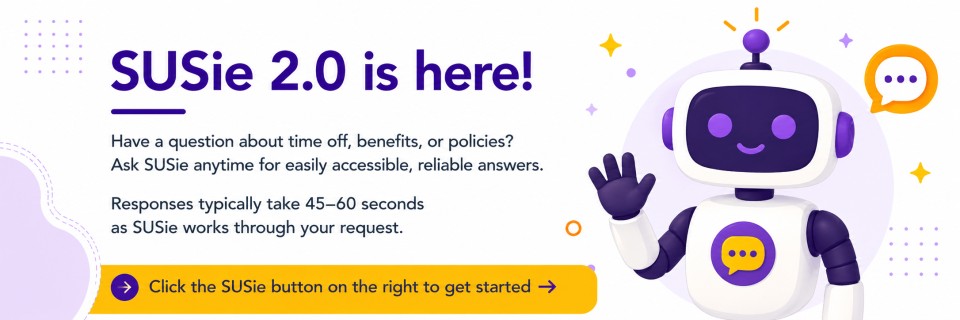
“SUSie” is an AI assistant on our intranet that gives staff quick answers to routine questions about pay, benefits and policy, any time of day. Before SUSie, even employees with regular schedules had two options: call the main HR line or email the team. Every question entered the service desk queue and was assigned to an HR team member, even when the answer was straightforward.
When we analyzed the questions coming in, we saw that many were routine and could be answered quickly and consistently by a bot. With support from a grant, one of our managers completed training in bot design and coding, giving us the ability to build a tool tailored to our workforce. Now, when that 2 a.m. question comes up, SUSie can respond in seconds, giving our staff one fewer thing to carry into the next day.
Getting there took some trial and error. We had to learn how to design SUSie for our specific needs, refine the questions she could answer and set clear boundaries around what still requires human support.
We also learned that the technology is only as good as the information behind it. Before launching a similar program, make sure your policies, documents and knowledge base are in formats the AI can reliably access, then pressure-test the system with the kinds of real questions employees will actually ask. AI tools can confidently produce inaccurate answers if they’re working from incomplete information, so rigorous testing—and ongoing refinement—is just as important as the initial build.
The Ideal Role Of AI
In our most recent launch, SUSie received more than 450 inquiries in the first week. If each one of those questions had taken an average of 30 minutes to answer, that would represent roughly 225 hours of HR staff time, or the equivalent of several full-time employees for that week. Usage may vary week to week, and some questions will always be too complex or too specific for SUSie to answer. Still, the potential savings are significant. For a nonprofit, that matters. And just as important, SUSie gives our HR team back time for the thoughtful, human work no chatbot can do.
That is the heart of the work. Used well, artificial intelligence should strengthen human intelligence, not replace it. SUSie is not here to take anyone’s place. She is here to help our people spend less time answering the same routine questions again and again and more time on the situations that require judgment, care, context and presence.
Many people are understandably cautious about AI. There is a version of this technology that can feel like it is being introduced primarily to reduce headcount or place more distance between employees and the support they need. SUSie was built for a different purpose. She can help an employee find a vacation balance, understand a routine policy or get a quick answer outside normal business hours. But she cannot sit with an employee who is struggling, notice what is left unsaid or weigh the human context behind a difficult situation. When a question becomes complex, personal or sensitive, it belongs with a person. We designed SUSie with that boundary in mind.
Considerations Before Adding AI Tools To Your Workplace
That is the question I would encourage any organization to ask before bringing AI into the workplace: Does this tool give people back time for the human work, or is it trying to do the human work for them? The first kind can help a caseworker be more present, a manager be more available and a nurse have more room to care. The second risks automating the very thing that gives the work meaning.
Regardless of industry or profession, if your organization is looking to implement AI agents, you must be intentional about protecting sensitive information and limiting AI’s access to only the data required for its purpose. Whether it be a patient, an employee or a client, sensitive data must be protected. Strong security and data governance are essential to creating a sustainable AI system.
Final Thoughts
My nonprofit serves more than 10,000 New Yorkers each month, and no one benefits when our HR inboxes are overflowing with questions that could be answered quickly and accurately. SUSie helps clear away the routine so we can stay focused on what matters most: people taking care of people. For an organization like ours, the smartest thing AI can do is make more room for humans.
Read the original article here.