
S:US Hosts 16th Annual Harvest Celebration, Showcasing Urban Farms Program’s Impact
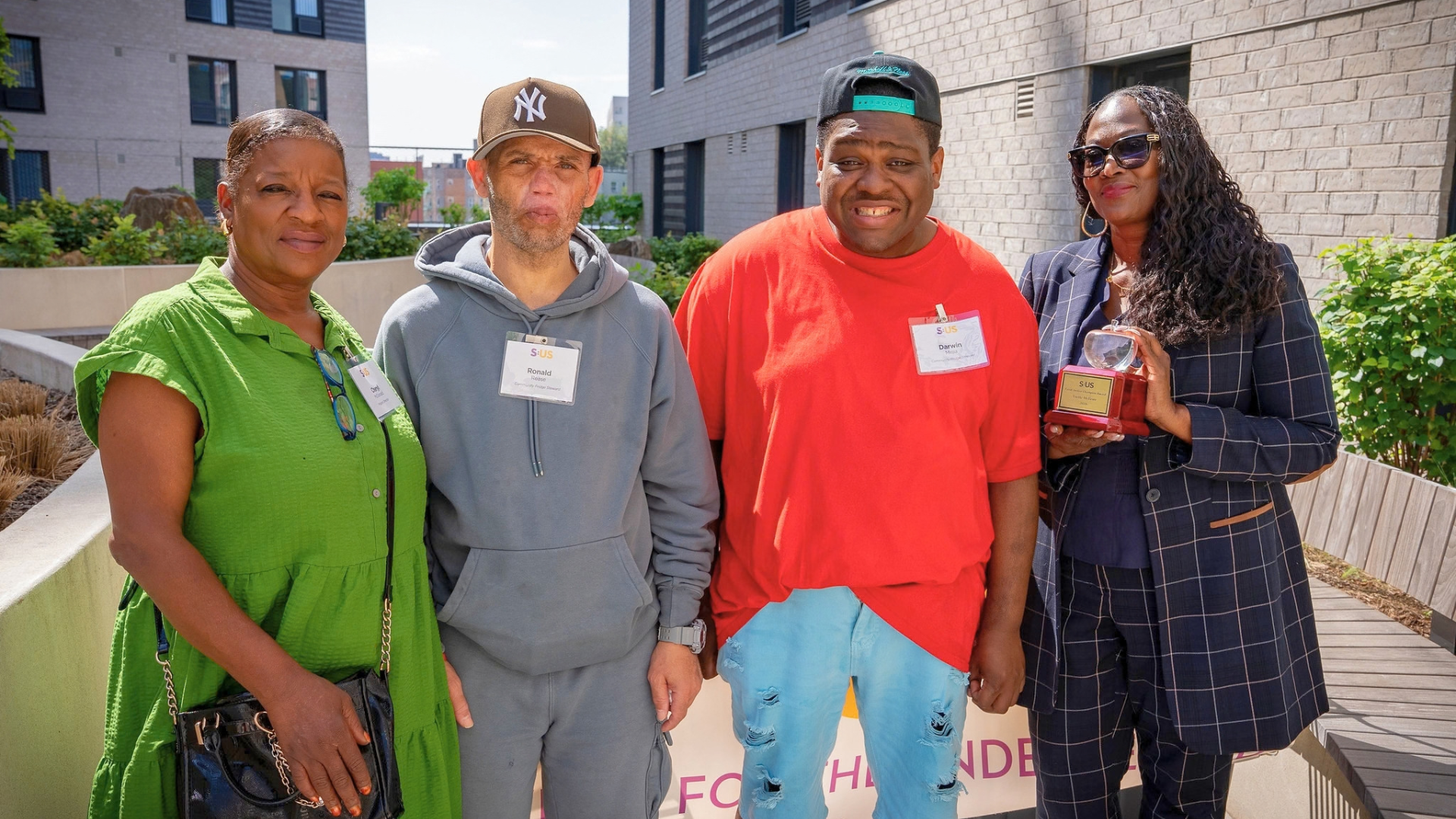
Food Justice Award Recipients: Cheryl McDonald, Ronald Mease, Darwin Mejia, Yvette McBean.
FOR IMMEDIATE RELEASE:
September 16, 2026
CONTACT:
[email protected]
Urban Farms Program has grown over 14,000 pounds of food to keep vulnerable New Yorkers from going hungry
Photos and Videos Can Be Found HERE
The Bronx, NY – Earlier today, Services for the UnderServed (S:US) hosted its 16th Harvest Celebration, an annual gathering of farmers, volunteers, and community leaders who are leading the fight against rising food insecurity during Hunger Action Month.
The Harvest Celebration showcased the work of Services for the UnderServed’s Urban Farms program, which uses gardens and beehives across New York City to grow fresh food while creating meaningful opportunities for program participants. Through the program, these urban farmers, residents of S:US’ supportive housing, and day habilitation program participants for people with intellectual/developmental disabilities, build employment skills, experience the therapeutic benefits of working with plants, and give back to their communities.
This year’s Harvest Celebration arrived as the rising cost of living continues to push families into food insecurity. As SNAP work-reporting requirements begin to take effect, more than ever, New Yorkers are looking for community-based solutions to address this crisis. In response, Services for the UnderServed works to meet that need through a range of food-access programs, including community fridges, emergency food distribution, and its Urban Farms program, which cultivates 14,000 pounds of fresh produce and honey across 98 growing sites across New York City – equating to roughly 10,000 meals.
“Having a stable home can change the course of someone’s life, but lasting stability also means being able to put healthy food on the table and feel connected to your community,” said Perry Perlmutter, President and CEO of Services for the UnderServed. “Our Urban Farms program brings those pieces together. The food grown here goes directly into our communities, while the gardens give the people we serve opportunities to build skills, contribute, and take pride in what they’ve created. At a time when so many New Yorkers are struggling with the cost of basic necessities, this work matters.”
Complementing Urban Farms, S:US’ five community fridges—three in Brooklyn and two in the Bronx—have been running since 2022 and are stocked regularly with produce and pantry essentials for neighbors in need, free of charge.
At the Harvest Celebration, Services for the UnderServed launched a Free Pop-Up Store pilot, where donated clothing and household goods were made available to community members at no cost, giving quality items a second life and helping meet everyday community needs. The pop-up also served as a hands-on vocational training opportunity for people with intellectual/developmental disabilities supported by S:US.
This year’s Harvest Celebration was held at Starhill Phase I, a new multi-phased, mixed-use affordable and supportive housing development that brings 326 affordable apartments to the Morris Heights community. The organization held a food drive and attendees participated in wellness and nutritional education activities, ate fresh food grown from S:US’ Urban Farms, and heard from community advocates. The donations from the food drive will supplement S:US’ ongoing efforts to provide vital food assistance to families and communities in need.
For more information on Services for the UnderServed, visit sus.org.
###
About Services for the UnderServed (S:US):
S:US helps vulnerable New Yorkers build stable, healthy, and fulfilling lives, starting with a place to call home. Through homelessness prevention, affordable and supportive housing, and services that promote health, independence, and community, S:US creates pathways to lasting stability. Even as it serves tens of thousands annually, S:US meets each person with dedicated support shaped around their own path and goals. Their efforts are supported by various local, state, and federal government entities, foundations, corporations, and individual donors.